
Psycho Rodeo
- Send to E-Reader and Enjoy!
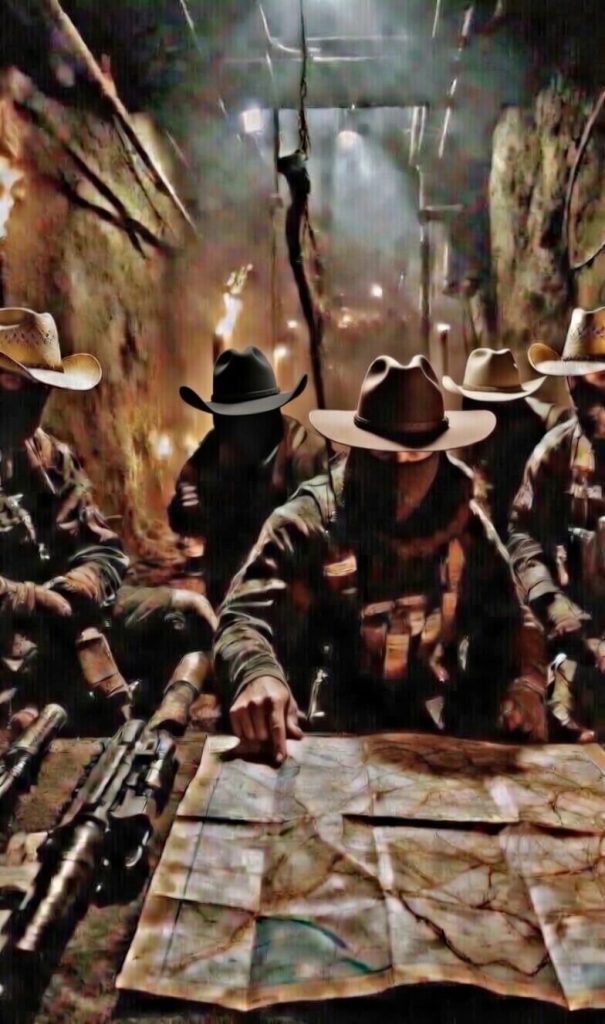
The hyper competence, slapstick humor and deep emotion of MASH, trapped in a gunfighting brawl on the high desert highways in a whiskey-fueled resistance of spec ops veterans who fight dressed as rodeo clowns.
It's 2039, twelve years into an international occupation. Rick Bowman, a cowboy known as Longshot ever since a locally famous hunting shot at an elk in high school, has been grieving in isolation on his remote homestead since his wife Erin was brutally murdered by an occupation soldier five years ago.
Understanding revenge solves nothing, he meditates upon a solution. Finally realizing there are tens of thousands of women across the country who've died over the course of the occupation, he knows the only justice is in ending the war. He devises a plan to shatter the Alliance of 37 and force a withdrawal.
He returns to the resistance, only to find they've spent the millions he sent home to Erin while military contracting to build and equip a hidden firebase. Now he has to whip a whiskey-fueled bunch of brawling veterans into a spec-ops team that fights as rodeo clowns.
The Man Cave was alive with the hum of computers, radios and big screens.
Longshot looked around the space, eyes roaming over racks of rifles and a half dismantled Ford Raptor pickup in the garage. Its engine was on the workbench, axle parts strewn all over.
Mountable weapons systems and machine guns were displayed everywhere.
“Benegan,” he said, turning a slow circle. “This is… hell, this is freakin' amazing. Where’d you guys land this kinda cash?”
Things got quiet. Laughter bouncing around the room died. Chairs creaked, nobody making eye contact. Nervous looks all around.
Colonel Benegan cleared his throat. “Now, don’t get concerned, Rick. But we kinda— used Erin’s money for a lot of it.”
Rick's eyes snapped back to Benegan, glaring.
Benegan shrunk, then brightened, snapping his fingers and pointing.
“INVESTING! Seed capital, son! You own a lotta land now! And, all these computers,” arms out, sweeping the room.
Sixkiller leaned forward, eager to defuse the tension. “I made a new rifle for you, Longshot. A real fuckin' humdinger!”
“These Raptors ain’t nothin’ to sneeze at, Rick,” stated Edgar. Then he zipped up, remembering Longshot hadn't seen the other two yet.
Rick wasn’t hearin ‘em. His stare was locked on Wilford Benegan’s icy grey eyes.
“Wil, I sent Erin just shy of twenty-seven. Million.” Rick said quietly. “How much?”
Benegan looked away, mumbling. “Makin’ whiskey ain’t cheap, Rick.”
He swallowed a huge shot of whiskey, looking back up. Rick feinted, making Benegan flinch.
“How much, Wilford?” He paced deliberately around the table, flexing a big fist.
Benegan finally blurted, “Maybe three, four Big,” almost proudly.
Rick blinked. Took Colonel Benegan’s highball, slammed it all, sighed in relief and examined the room again.
“That ain’t so bad,” Rick commented, nodding strangely. He poured more whiskey and chugged it all.
He asked the other guys, “Right?”
He was met with nervous glances, their heads turning to catch each other’s eyes. But not Rick’s eyes. He noticed those looks. Like kids caught lying about the dog.
Looking at Benegan, Rick zeroed in eye to eye and crooked his finger, twice. He examined the room again. Every dadgum face. All this damn machinery.
“Uh, Rick. It's more like— three mil LEFT, son.”
Longshot’s eyes cut back to Benegan. “What.”
Colonel Benegan hesitated, swallowing. “More like. Three million. Uh… left, son.”
The bottle hit the table, rattling the ashtray. Rick rose slow, snatching his battered Shady Brady. Putting his hat on, he headed for the door.
“We’re done, old man.” Then he paused, turning back. “No.”
The room froze. Jimmy Sixkiller maintained his pose rigidly, reaching for a glossy magazine.
Longshot pointed a finger around the long table. “You. You. You. ALL of you. Except Lawn Dart,” holding his hand towards his best friend, palm facing out.
Lawn Dart leaned back and relaxed with a gloating look, absorbing more whiskey.
Rick’s voice dropped to a dangerous calm. “We’re all at fuckin’ WAR now. You bastards. You stole my money? Is that what you thought? You idiots. You stole Erin’s money.”
He pushed through the door, boots echoing on concrete. Outside, the old Ford thundered, roaring off with Big Dog barking like doom. They listened, truck fading as it headed away from the building.
Colonel Benegan looked around the table at these tense men. Waited a long second, catching each one in the eye as everyone slowly relaxed.
He leaned forward, arms around his whiskey glass and took a slug. “Well, that didn’t go too bad, at least.”
They all started giggling hysterically.
Children of The Sun
- Send to E-Reader and Enjoy!
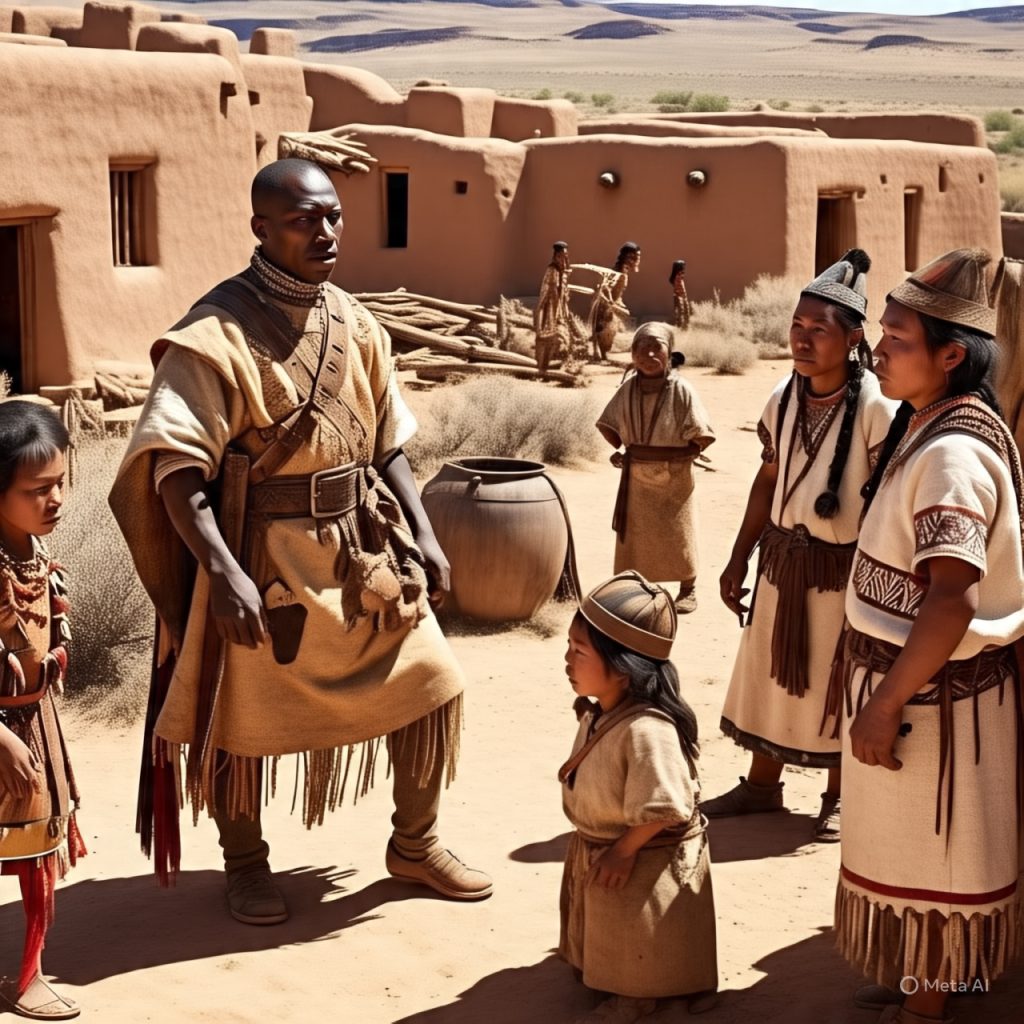
Estebanico, a Moroccan-born enslaved man, became the first African to explore North America. His odyssey began with the disastrous 1528 Pánfilo de Narváez expedition to Florida. Following starvation and shipwrecks, he was one of only four survivors. For eight years, Estebanico navigated the wilderness alongside Álvar Núñez Cabeza de Vaca. He adapted brilliantly by learning multiple Indigenous languages and assuming the role of a respected medicine man, eventually reaching safety in Mexico City in 1536.
Recognizing his invaluable scouting skills, Viceroy Mendoza purchased Estebanico. He was assigned to guide Fray Marcos de Niza’s 1539 expedition to locate the fabled Seven Cities of Gold. Sent ahead as an advance scout, Estebanico boldly crossed present-day Arizona and New Mexico, tracking tales of the wealthy region of Cíbola.
In May 1539, Estebanico arrived at the Zuni pueblo of Hawikuh. He sent forward his customary ceremonial gourd to announce his arrival.
However, the Zuni chiefs grew deeply suspicious of the owl feathers on the gourd, which symbolized death in their culture.
His demands for women and gifts, combined with warnings that a massive army followed him, alarmed the pueblo elders.
Frey Marcos de Niza reported Estebán dead based on translator reports.
When Coronado reached Hawikuh, he found only mud huts, and may have confirmed Estebanico’s death by recovering his remaining personal possessions.
The kiva was cool and shadowed, low ceiling supported by carved beams, earth walls absorbing the murmurs of council. A faint fire flickered in the central pit, illuminating the sand painting sprawled across the floor: red ochre rivers, white mesas, black dots marking observation points.
The leaders sat cross-legged, moccasins silent on packed earth, eyes sharp, hands hovering above symbols that would vanish as soon as they were traced.
“The Outlander approaches,” murmured one elder, voice soft as wind through juniper. “He is neither friend, nor foe. His intentions must be read.”
A younger observer traced a line in the colored sand, from the painted river to the edge of a mesa.
“He handles animals,” she said. “The ghosts they call... Horses. That is his weakness. And his signal.”
The elders nodded. The ephemeral map traced probability itself: likely paths, likely reactions. A circle of white sand indicated potential allies; a triangle of red marked danger. Words were measured, gestures deliberate.
When deliberation concluded, the sand painting was erased, swept away by hand and moccasin, one ritual motion. Nothing remained but the knowledge in their heads.
Below the mountain, along the river, Estebanico, Bilal once more, moved quietly among the horses, adjusting bridles, testing the flank, halo of owl feathers shifting with each careful motion. His hands lingered on leather, smoothing, testing, aware of every sound in the twilight. Wings beating above, brush whispering along the river, the faint glint of obsidian caught in the last light.
A sudden snort and a stamp of hooves raising dust along the far bank pulled him like a thread through a labyrinth. They had seen him, anticipated his movements and nudged him toward action. He didn’t hesitate. Knowledge was survival. Patterns were currency.
Frere Francois Moreau had been watching from the edge of the clearing, musket leveled, sword in hand. Moccasined feet appeared along the riverbank, hands moving toward weapons.
Each pause was a question, each movement a story. Francois’ certainty was singular. Protect The Cross, the fire circle, the livestock. Protect the weak. Act decisively.
Bilal, known by holders as Estebán, tilted his head, assessing the perimeter, beads shifting at his wrist, pouches rustling.
“They don’t know what I will do,” he murmured to Francois, voice soft, from near the river. “They only know I am The Hostler. That’s enough. It will draw them from the camp.”
They moved slow, careful in the dark. Soft shuffling of leather covered feet, whispering on the trail.
Suddenly Bilal the Outlander moved into view, indistinct, halo of owl feathers catching the fading light.
The warriors pounced. Francois lunged forward, musket flashing, sword arcing. The riverbank was a sculpture of tension, poised against the purple-gold sky. Men and dim shadows, feathers and firelight, sword and club, the smell of dust and water thick in the air.
Water splashed abruptly. The sounds of thrashing in the river, arms flailing, thuds against suede, bone, wooden staff, woven yucca.
Then as suddenly as it started, the figures faded. Ghostly in the graying half-light, they slipped back into juniper and piñon, leaving nothing, save whispers of movement, faint rustle in the grass.
Francois lowered his sword, scanning the riverbank, eyes and ears tracking every subtle disturbance.
Estebanico was gone. The halo of owl feathers, some beads, a few pouches. A circlet of Apache Tears, caught on a low branch.
A single owl feather drifted, spinning in an eddy. A shallow ripple curling outward along the river’s surface. Francois bent with his small torch, catching sight of the warriors, but no sign of Bilal. Water, wind, shadows lingering were the only ephemeral markers.
Back in the kiva, the Elder Council finished its deliberation, sand painting destroyed, swept and spread, yet knowledge preserved. They would watch, wait, and prepare.
The Outlander had been observed for weeks, proceeding at the head of the armored Spanish, the Paladin at his side. His movements were correctly anticipated, patterns properly discovered, yet his final vanishing was beyond comprehension.
Downriver, currents carried the floating feather and bead, glinting faintly in the torchlight. Francois followed these subtle signs for a half hour, then let the river take them, silent acknowledgment of what had passed. What could never be claimed, and must be kept from the journal.
De Niza and Coronado would never comprehend this. The juniper whispered over the bank, as if the landscape itself would always remember this encounter.
Bilal became a legend, before he was gone. Not known to be dead, yet not seen alive.
Shadow between worlds, Nata-aska walked the mystic land. The river always kept its secrets, the juniper whispered, the beads shone their glimmer.
And the Outlander had vanished, exactly as the Zuni expected, leaving only the trace of what had been. A ghost of action, symbols floating downstream, and the enduring question: where and how had he gone?
Now, Bilal the Slave was free, whether dead or alive. Francois wrote him dead in the report to Coronado. But his own belief remained, never given.
Big Medicine
- Send to E-Reader and Enjoy!
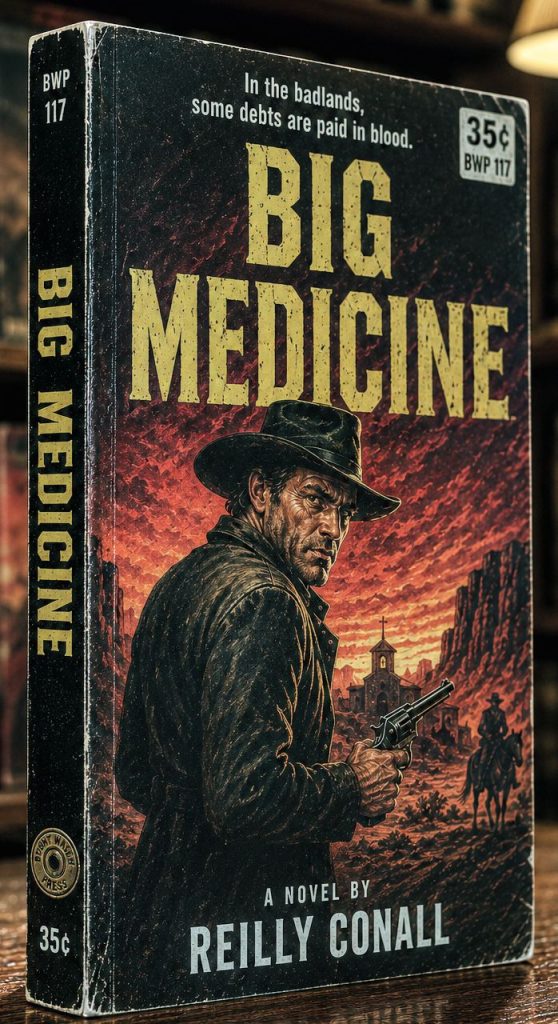
The First Book from Medicine Wagon, a Supernatural Western series, 1880s. Kind of like Remo and Chiun meet Tex Arcana vs Jonah Hex
This guy crossed over, was revived by lightning and came back. He's got a page from an archaic occult script in his boot. That's why he crossed over and came back. Supernatural power.
He encounters a guy who's "the medicine man" in my mind, a snake oil guy with a gypsy wagon.
Medicine Man is looking for these pages and sections from a Necronomicon type Tome.
Now he's got Lynch to find them for him.
Other guys are looking too. Wizards, gunslingers. Preachers with secrets. Doomed Civil War Raiders.
Wherever the adventure leads in each paperback, it's gunfights, darkness and people after these pages to assemble the Tome.
Something about the document that saved his life.
My feeling is not that the old man planted it, but that Lynch and the document found each other.
The old man isn't exactly a wizard, more of a scholar. He needs Lynch to do the work. Like a Sackett or Hondo, he has his own side quests.
But... People, things that look like people, Medicine Man, some mysterious beautiful widow from Lynch's past.
They're in a rush, trying to assemble a Tome, from fragments, pages, sections recipes, drawings, maps of... Not places, exactly. And the actual binder for it.
The rope creaked in the dark. He never knew you could hear ‘em ride away when you were dead.
There was a lot he didn't know.
Loud noise, blistering heat. Hell on the way, come to claim its own. He could hear the souls roaring. Something touched his foot. Red on his eyelids. The thing touched his foot again. Stayed there. He faded more.
A bee stung his neck, waking him again. He knew now. His toe touched the ground. He pressed, hard as he could, twisting in the wind.
He’d lived somehow, He was touchin the ground. Tried to take some pressure off. Forgot he wore Cavalry boots. Square toe, he turned it, corner touched, he rotated, a slow spin, then the other way. His eyes opened a crack. Tree was on fire. Lightning strike. Branch had split off the tree some. The trunk was burning. He waited.
He was standing like a man when his eyes opened. Hands were only calf wrapped. Found the tail, worked it loose. Grabbing the noose, he swung his legs up, got ‘em around the branch and it finished breaking, falling heavy to the ground next to him. Hurt his knee some.
He was out. Sitting there catching his breath. Bastards took his brand new ten dollar hat.